
There's a place about 45 minutes by ferry from Faro Marina where the Algarve you know simply stops. No cars. No roads. No motorway noise. Just a long, narrow barrier island in the Ria Formosa Natural Park, home to around 1,000 people who make their living from fishing, clam harvesting, octopus trapping, and increasingly, oyster farming and eco-tourism.
Culatra Island is roughly 6-7 kilometres long and ranges from 100 to 900 metres wide. It's one of five barrier islands that protect the Ria Formosa lagoon from the Atlantic. And it's made up of three distinct villages: Culatra (the largest, with around 750 permanent residents), Hangares (about 100), and Farol (around 80 permanent residents, though that swells dramatically in summer).
We visited all three as part of our Algarve Unlocked series, where we're filming around 50 towns and villages across the Algarve. This is the sixth episode, and Culatra is unlike anything else we've covered so far.
📺 This article is a companion piece to our Algarve Unlocked video on Culatra Island. Watch the full episode for the boat tour, the island walk-through, the oyster tasting, and some excellent restaurant recommendations.
How Do You Get to Culatra Island?
There are three main ways onto the island. Regular ferries run from the dock near Faro Marina (about 40-45 minutes to Culatra village, then on to Farol). The other main departure point is the Olhao Ferry Terminal, just east of the iconic Olhao market (about 30 minutes to Culatra). In summer there are around 10 departures a day; in winter that drops to roughly half. Always check the last ferry time at the pier. Getting stranded overnight is a real possibility if you're not paying attention.
Private water taxis are also available, and you'll see their phone numbers posted around both Faro and Olhao.
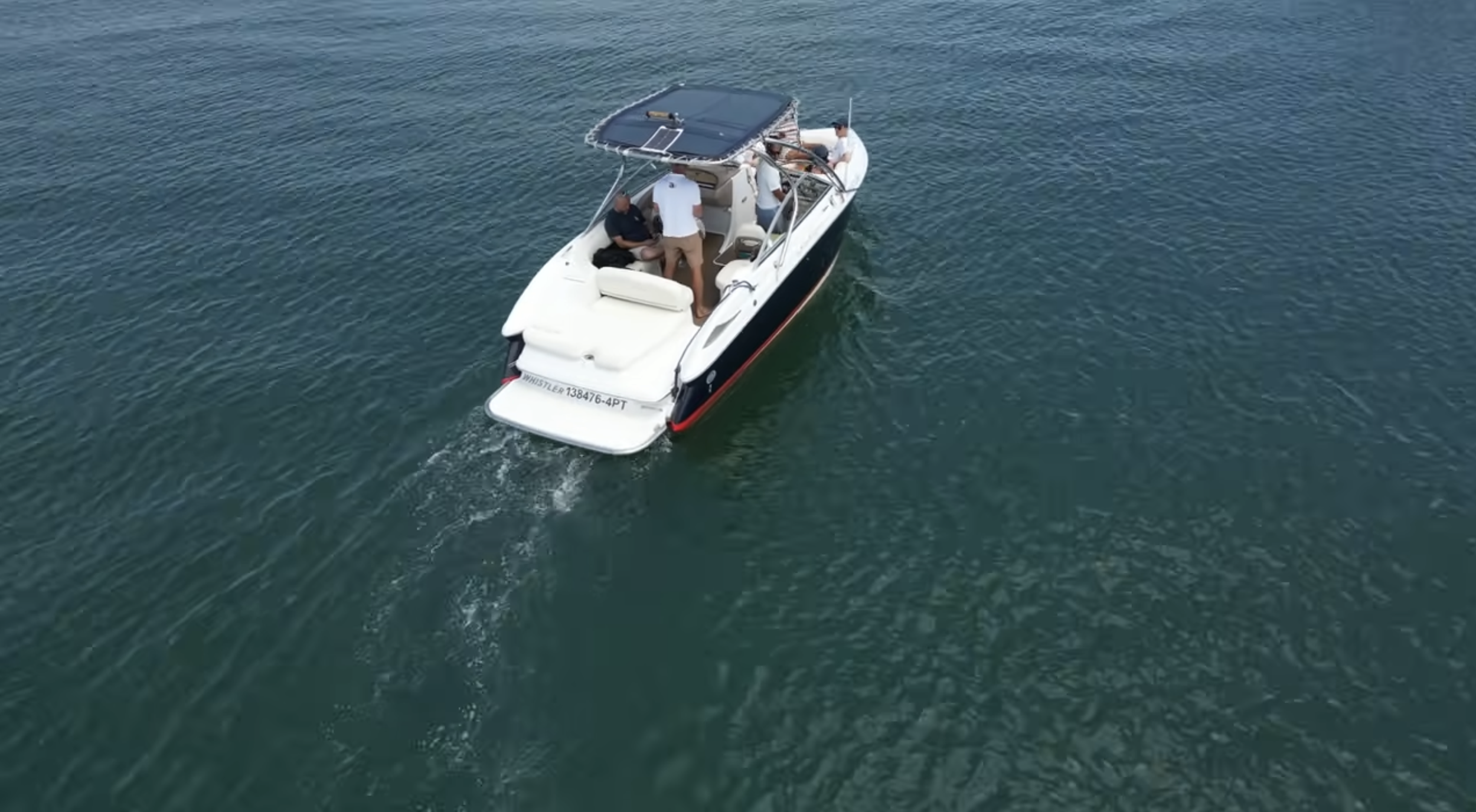
The best experience we had, though, was with Paulo from Algarve WOW, who runs private boat tours out of Faro Marina. Paulo and his team took us around the island, and his knowledge of the Ria Formosa, the fishing community, and the local oyster farms is outstanding. He also operates under Ria Formosa Boat Tours. If you want to do Culatra properly, rather than just hopping on and off a ferry, going with someone like Paulo makes a real difference.
One important note: the ferry stops at Culatra village and Farol, but not at Hangares. To get to Hangares you either walk from one of the other villages or arrange a water taxi.
Culatra Village: A Working Fishing Community
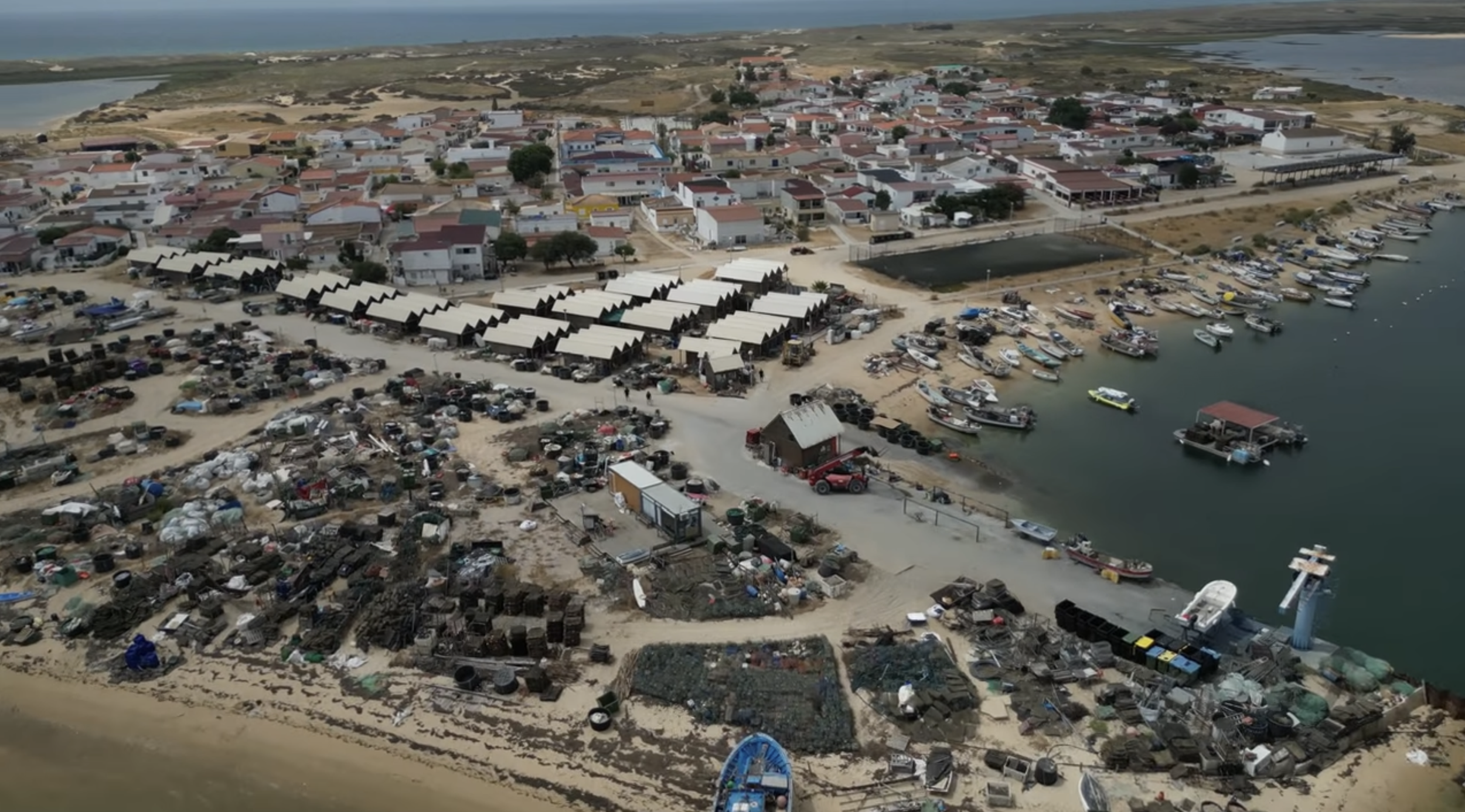
Culatra is the main settlement on the island, sitting on the northern (lagoon) side. Administratively, the island belongs to the freguesia of Faro (Se e Sao Pedro), though it feels like it could be in a completely different country.
The community dates back centuries as a seasonal destination for sardine fishing. According to the Culatra 2030 project (a University of Algarve initiative), the housing nucleus dates from the 16th century, when fishermen came seasonally from nearby towns. Over time, some families settled permanently, drawn by the rich waters and the natural shelter of the Ria Formosa. By the early 20th century, a proper community had taken root, largely made up of fishermen from Olhao and Fuseta.
Most of the houses were built informally. The village had no electricity until the 1980s. Today, 316 homes are connected to the electricity grid, and the island is making serious moves toward renewable energy. The Culatra 2030 initiative has installed five photovoltaic production units covering more than 25% of the community's daytime energy needs, along with battery storage and a solar-powered boat developed in partnership with Sunconcept. The goal is to become Portugal's first clean energy island community.
This is still very much a working community. People make a living from fishing, harvesting clams from the Ria Formosa, trapping octopus, and farming oysters. Monthly incomes vary, but many residents earn between €800 and €2,000 depending on the season and the catch. The oyster farming side has been a significant development: around 20 young entrepreneurs from Culatra started oyster operations with EU support, and the conditions in the Ria Formosa are so good that oysters mature in about 18 months here compared to 36 months elsewhere.
For such a small place, the community infrastructure is better than you'd expect. There's a local government delegation, a strong residents' association (AMIC), a small post office, a library, a Red Cross post, a small government-run medical clinic, and a school providing basic education. There are around 10 restaurants on the island, mostly on the northern side.
We tried to visit Neoza's, a local cafe famous for its Jesuit cakes (a traditional cake originally from northern Portugal that Neoza brought to the Algarve after marrying a Culatra local), but it was closed when we stopped by. If you visit, try to time it right.
Hangares: The WWI Seaplane Base
Walking west from Culatra village, you reach Hangares, the smallest of the three settlements. The name gives away its history: "hangares" means hangars.
During World War I, this stretch of the island was chosen as the site for the Algarve Maritime Aviation Centre, a seaplane base. Construction began in 1917 as part of a Portuguese-French agreement for anti-submarine patrols. The hangars and main structures were built, but the base was never officially activated as the war ended before it became operational. The Portuguese Navy subsequently used the site and surrounding area for training and manoeuvres, with military activity continuing into the late 20th century. You can still see remnants of old bunkers and barbed wire fencing along the shore.
The settlement's first permanent resident is locally known as Manuel Lobisomem (Manuel the Werewolf). Despite the colourful nickname, he was a real person: a worker for the Sotavento do Algarve Ports Board who built a hut on the island in the early 20th century. His son, Vitorino Neves, was born in Hangares in 1936 and remembered watching seaplanes anchor in the Ria Formosa during his childhood, with French pilots sharing milk bread with the local kids.
Today there's a small monument in Hangares featuring a miniature Tellier T3 seaplane, paying tribute to the area's aviation history. The settlement itself is very small, with limited infrastructure, and gets far fewer visitors than Culatra or Farol.
Farol: The Lighthouse Village
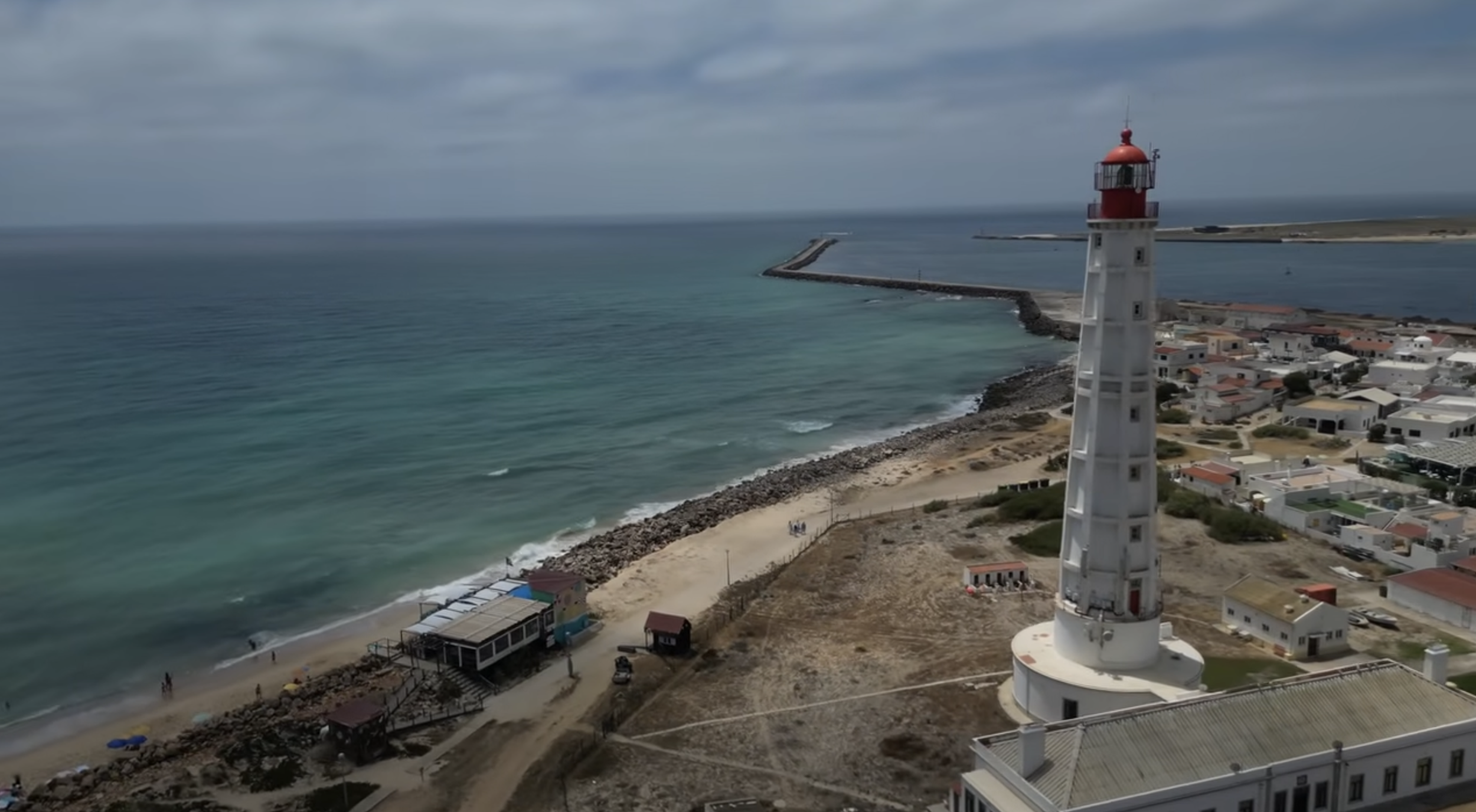
At the western end of the island, Farol takes its name from the Farol de Santa Maria lighthouse. The lighthouse was first constructed in 1851 and later extended to its current height of 46 metres, with 220 steps up to the lamp. It's still traditionally operated with keepers living on-site.
Farol is a different proposition from Culatra village. Where Culatra is a year-round working fishing community, Farol is more of a seasonal settlement. Most of the buildings are holiday homes that come alive in summer. The permanent population is small (around 80-84 residents), but in peak season the village fills up considerably.
The beach at Farol (Praia do Farol) holds Blue Flag status, and it's easy to see why. You can walk the roughly 4 kilometres between Farol and Culatra village along wooden boardwalks that cross the dune system, which is a protected part of the Ria Formosa Natural Park.
Nick actually got married on Farol ten years ago, so he knows the island well. As he put it: the moment you step off the boat, your shoulders drop. There are no cars, so the silence is immediate. It feels less like the Algarve and more like Portugal from decades ago, before mass tourism changed the coast.
Where to Eat on Culatra Island
The food here is, unsurprisingly, all about seafood. And it's about as fresh as you'll get anywhere in the Algarve, because it comes straight from the Ria Formosa and the fishing boats that work the waters right outside.
On Farol, the options include Casinha dos Gelados and Cais Aqui as you arrive, Alam Bar, and a mini market on the lighthouse road. A-do-Joao (also known as Duo) is on the south side of the island, and we had an excellent lunch there. The restaurant is named after its founder, Joao, who was a well-known professional diver on the island. He passed away a couple of years before our visit, but the team kept the name and the tradition of serving local, seasonal fish. Shinoa, who runs the restaurant, told us everything is sourced from the Ria Formosa and local boats. If it's sardine season, they serve sardine. Sea bass in season, they do sea bass. Tuna runs from May to around September or October, and they buy from specific tuna boats they trust. If the water temperature is too high for quality clams or razor clams, they simply don't sell them rather than sourcing from elsewhere. That's the kind of integrity you want from a restaurant.
The Association is a restaurant and bar near the park and children's play area, which has stepped up its game recently with cocktails and quick food like burgers and snacks.
MarAmais Beach Bar is further east, a family-run spot (two sisters, now with one of their daughters taking over) that gets repainted with a new theme every year. Nick described it as a wooden beach bar literally on the beach with a laid-back atmosphere.
On Culatra village itself, there are several restaurants clustered around the northern side. The island has around 10 eating options in total across all three villages.
And then there are the oysters. The Ria Formosa produces some of the best oysters in Portugal, and Paulo from Algarve WOW runs regular oyster-tasting experiences with a local supplier. Nick tried them on camera. The results were... entertaining.
Could You Actually Live Here?
This is a question that comes up differently for Culatra than for the mainland towns we've covered. You're not really looking at Culatra as a relocation destination in the same way you'd consider Paderne or Alcoutim. It's a barrier island accessible only by boat. There's no running to the supermarket for a forgotten ingredient; there's a mini market for basics and you go to the mainland for everything else.
But people do live here, year-round. As Shinoa told us, she lived on the island for ten years. The rhythm is different: seven or eight months on the island working the restaurant season, then four months in the city for winter. Some residents stay year-round, particularly the fishing families. As Nick observed, if you're a poet or an artist and you need solitude, Culatra could be extraordinary. For regular daily life, it's more realistically a place to rent for a week or a month, get to know the locals, and experience something genuinely different.
The push toward sustainability is real and ongoing. Between the solar panels, the electric boat, the oyster farming, and the EU-supported community projects, Culatra is actively building a future rather than just preserving a past. The residents' association (AMIC) and the University of Algarve's Culatra 2030 initiative are driving this, with the goal of creating the first Portuguese clean energy island community.
What Culatra offers, more than anything, is perspective. The Algarve coast is 20 minutes away by boat, but it might as well be a different world. If you're considering moving to the Algarve and you want to understand the range of what this region actually is, beyond the beaches and the golf courses, a day on Culatra Island is time very well spent.
Culatra Island at a Glance
Location: Ria Formosa Natural Park, south of Faro and Olhao
Island length: approximately 6-7 kilometres
Total population: approximately 1,000 (Culatra village ~750, Hangares ~100, Farol ~80-84)
Administrative parish: Faro (Se e Sao Pedro)
Access: Ferry from Faro Marina (~40-45 minutes) or Olhao Ferry Terminal (~30 minutes); private water taxis; boat tours (e.g. Algarve WOW)
Cars: None. No roads. Walking only.
Facilities (Culatra village): Government delegation, residents' association (AMIC), post office, library, Red Cross post, medical clinic, school
Restaurants: Approximately 10 across all three villages
Key features: Working fishing community, oyster farming, Ria Formosa Natural Park, WWI seaplane base (Hangares), Farol de Santa Maria lighthouse (1851), Blue Flag beaches, Culatra 2030 clean energy initiative
Frequently Asked Questions
Can I drive on Culatra Island? No. There are no cars and no paved roads on the island. You walk everywhere. The island is small enough that this is perfectly manageable, and elevated wooden boardwalks cross the dune areas to protect the ecosystem (and your feet).
Which ferry should I take, Faro or Olhão? Both work. From Faro Marina the ferry takes about 40-45 minutes. From Olhao it's about 30 minutes. In summer there are around 10 departures a day; in winter roughly half that. Always check the time of the last return ferry.
Can I visit all three villages in one day? Yes, if you plan it. You could take the ferry to Culatra, walk to Hangares, continue to Farol, and catch the return ferry from there (or vice versa). The walk between Culatra and Farol is about 4 kilometres along boardwalks. Allow a full day if you want to eat and explore properly.
Is there accommodation on the island? There are rental homes, particularly on Farol, which is more tourism-oriented. Culatra village has some options too, though it's primarily a residential community. There's no hotel on the island.
What's the best way to visit? For a straightforward beach day, the regular ferry is fine. For a more complete experience of the island, its history, and the Ria Formosa, going with a private boat tour operator like Paulo at Algarve WOW is well worth it. He also runs oyster-tasting experiences.
Thinking about relocating to the Algarve? We've been helping people make the move since our earliest days as a YouTube channel, and today we're a fully licensed real estate agency and certified tour operator. Whether you need help finding a home, understanding the visa process, or just want someone to show you around, get in touch through our website and let's chat about making the Algarve work for you. You can also explore our full range of relocation services here.
