
Living in Porches: The Honest Guide to the Algarve's Pottery Village
Porches is one of those places you might drive past a hundred times on the EN125 without ever turning off to look. It sits between Lagoa and Alcantarilha, roughly equidistant between Portimao and Albufeira, on a hill above the oldest east-west road in the Algarve. There are about 800 people in the town itself, with roughly 2,000 across the wider parish.
It's small, it's quiet, and it doesn't shout for attention. But Porches has something that a lot of the Algarve coast has lost: a sense of itself. And the story of how it got here is genuinely interesting.
We visited Porches as the eighth episode in our Algarve Unlocked series. Here's what we found.
📺 This article is a companion piece to our Algarve Unlocked video on Porches. Watch the full episode for the walking tour, the pottery visit, and dinner at Porches Velho.
Where Exactly Is Porches?
Porches is a civil parish (freguesia) in the municipality of Lagoa. The parish covers about 15.6 square kilometres, and the 2011 census recorded a population of 2,011. The town was elevated to official town (vila) status on 12 July 2001.
In practical terms, it's about 30 minutes to Albufeira, 30 minutes to Portimao, and 15 minutes to Armacao de Pera. The EN125 runs right past, and there's an exit off the A22 motorway at Alcantarilha. The nearest train station is at Poco Barreto, a bit further north. Buses service the town, with stops outside the church, on the southern approach, on the western side of the EN125 near the beer garden, and on the northeast side of the EN125.
If you're coming from Faro airport, you're looking at roughly 40 minutes by car.
The Pottery Story
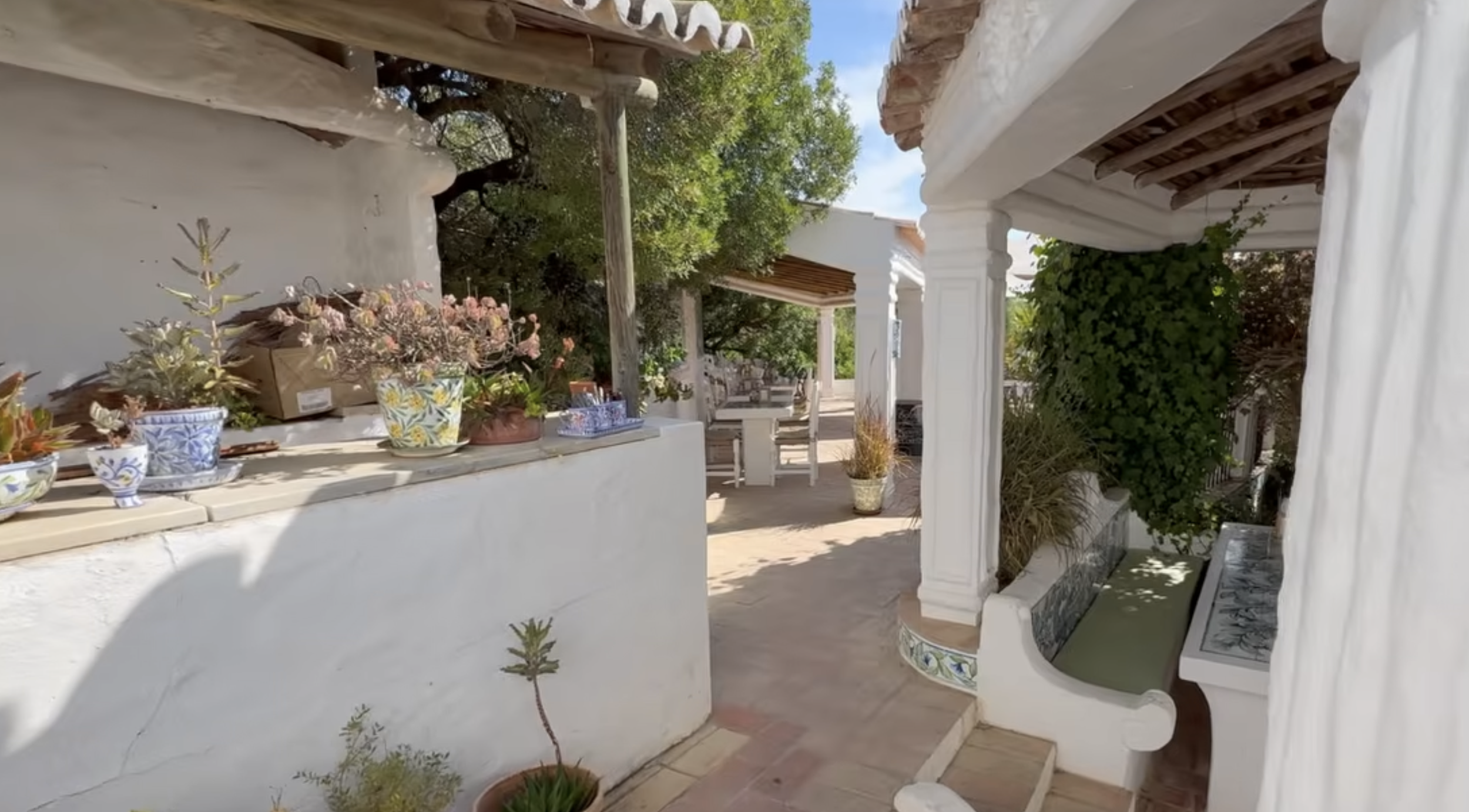
This is what puts Porches on the map, and it's a genuine piece of Algarve cultural history.
The area around Porches and neighbouring Lagoa had a pottery tradition going back centuries, with clay pits in the area that had been used since at least the Neolithic period. Archaeological finds from the parish date back to between 5000 and 4000 BC. But by the 1960s, the craft was in serious decline. Mass-produced plastic and metal goods had undercut the traditional potters. By the time Irish artist Patrick Swift arrived in the Algarve in the early 1960s, there were only two potters left working in nearby Lagoa.
Swift had settled in the Algarve with his wife Oonagh and their family, drawn by the quality of light and the affordability of the region. In his 1965 book "Algarve: a portrait and a guide," he wrote about the decline of quality pottery in the region. He became determined to revive the craft, and in 1968, he and Portuguese artist Lima de Freitas founded the Olaria Algarve, better known as Porches Pottery.
Neither man had ever thrown a pot in his life. Swift later described the venture as "so foolhardy that, looking back on it, I do not know how we had the temerity to start." They approached a local potter, Gregorio Rodrigues, who agreed to work with them. The two artists researched ancient pottery designs and motifs from the Moors, Phoenicians, and Romans in museums across Europe, developing the distinctive patterns of flowers, animals, and foliage that became the Porches Pottery style. They used a majolica (tin-glazing) technique believed to have been brought to Europe by the Moors.
The pottery started in a farmhouse with wood-burning kilns about half a mile from the current location. In 1973, the current premises were built with the help of a government grant, designed by Swift himself in the style of a traditional Algarvian farmhouse, complete with hand-painted tiles and decorative relief work on the facade.
Swift died in 1983. His wife Oonagh managed the pottery for over 20 years until her death in 2012. Today it's run by their daughters, Estella Swift Goldmann and Juliet Swift, both accomplished artists. Several of the artisans have been painting at the pottery for decades. The cafe, Bar Bacchus, is decorated with tiles painted by Swift and his daughter Katherine.
Swift's influence on Porches goes beyond the pottery. He designed the interior of what is now the O Leao de Porches restaurant (a restored 17th century building), was instrumental in founding the original International School of the Algarve, and designed the stations of the cross at the parish church, where he is buried.
The pottery has a recently opened cafe serving coffee from Fabrica Coffee Roasters, which Nick rated as one of the best in the area. You can also pick up handmade pieces to take home.
What Does the Village Feel Like?
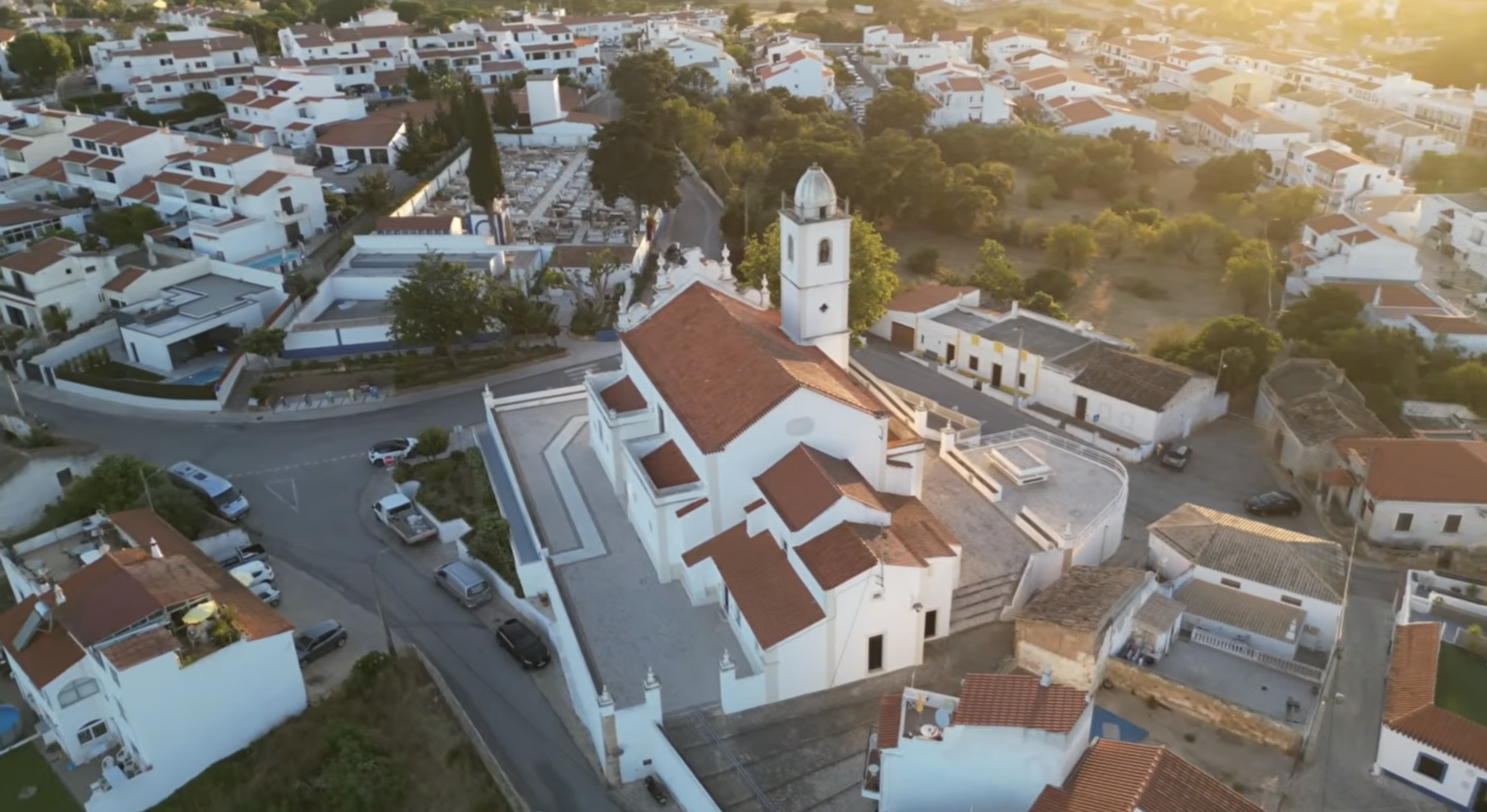
Porches is compact and walkable. The church sits at the centre, as it does in virtually every Portuguese village. The Igreja de Nossa Senhora da Encarnacao (Church of Our Lady of the Incarnation) was built in the 16th century, partially destroyed in the 1755 earthquake, and rebuilt in the 19th century.
The area has been occupied since prehistoric times. According to historical sources, the current settlement of Porches dates from the mid-16th century, when settlers moved inland from an older settlement called Porches Velho, closer to the coast. Porches Velho had been occupied since the Roman period, and by 1253 it was already a sizeable town with a judicial district and a medieval castle.
The village has some distinctive chimneys that are worth noticing as you walk around. These traditional Porches chimneys were custom-built according to the family's wealth. The master builder would ask how many days the owner wanted the chimney to take, and the more days, the bigger and more ornate the result. One of the most notable examples, located under the Casa Museu on Rua da Chamine, features a keep, a spoked wheel, and a human figure, and dates from 1793.
Beyond the history, the village has more going on than its size suggests. There's a government medical clinic (extensao de saude) and Vitality Health and Family Care, a private family-orientated clinic offering doctors, nurses, and a range of external specialists including psychiatry, speech therapy, and physiotherapy. There's a pharmacy, a fitness park near the water tower, and the Centro de Apoio Social de Porches (CASP), which runs both a kindergarten/creche and an elderly care home.
The village school caters for children from preschool (age 3) up to age 14. And just down the road towards Lagoa is the Nobel Algarve British International School, one of the largest international schools in the Algarve, which is a significant draw for families considering this area.
Where to Eat in Porches
For a village of 800 people, the restaurant scene is surprisingly good.
O Leão de Porches (The Lion of Porches) is the standout: a restaurant in a restored 17th century building (interior designed by Patrick Swift) that holds a Michelin Guide selection. It's the fancier option in the village.
Porches Velho is where we ate, and it was a lovely experience. The name means "Old Porches" and it's set in an old cellar that's over 200 years old, with a striking 5-metre ceiling in the main dining room. We ate on the back terrace on a hot summer evening. Traditional food, good atmosphere, and the kind of place that makes you want to come back.
Vila Vita Biergarten is just across the EN125 and is a good spot for a beer before dinner (which is exactly what we did).
Rolha Wine Bar was closed the night we visited. Nick believes it opens Thursday through Saturday.
Pastelaria Palmeira is on the road heading down toward the EN125. Perola de Porches is a cafe in the village where we ended up chatting with a local woman about the history of the place on the walk home from dinner. Snack Bar Lamy is tucked in one of the side streets.
And the cafe at Porches Pottery itself is well worth a stop for coffee.
Could You Actually Live Here?
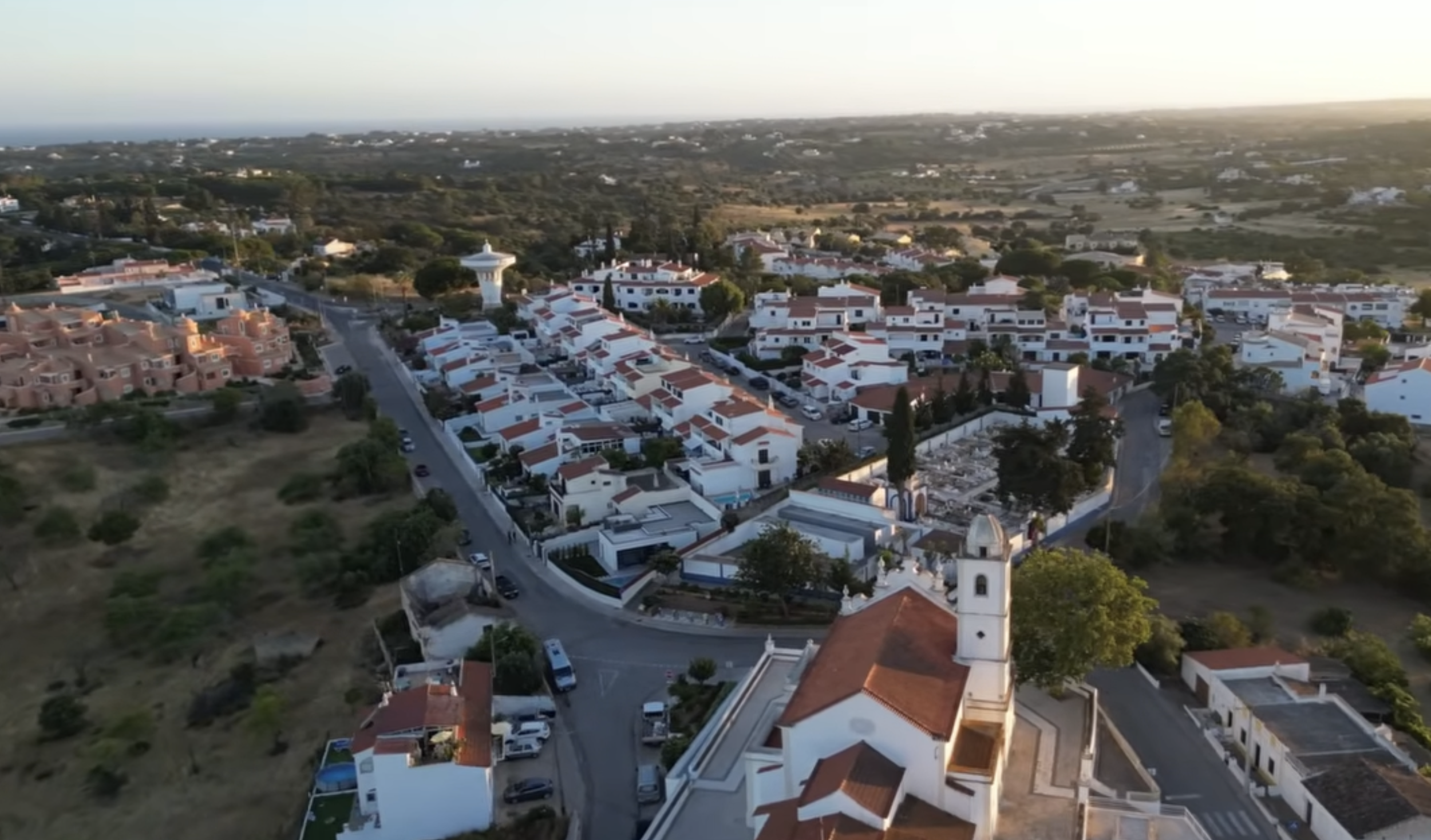
Porches is a genuine option for people considering the central Algarve. It's not remote (unlike Alcoutim) and it's not on the tourist frontline (unlike Benagil or the coast). It sits in a sweet spot: close enough to beaches, shops, and motorway access to be practical for everyday life, but far enough from the coast to retain village character and avoid the summer crush.
The Nobel Algarve British International School nearby makes it particularly interesting for families with school-age children. The health facilities cover the basics, and you're only 15 minutes from Armacao de Pera for a bigger range of shops and services.
Property here is varied. You're in the municipality of Lagoa, which has seen significant development and price increases in recent years, particularly along the coast. Inland areas like Porches itself tend to be more affordable, though the proximity to the coast and the international school keeps prices above what you'd pay in a truly inland village.
What Porches has is cultural depth. The pottery tradition isn't a tourist attraction bolted on. It grew from the village and it's still here, still being made by hand, still run by the founder's family. The restaurants reflect the same character. The village has managed to embrace tourism without being consumed by it.
If you want proper rural Algarve with modern conveniences within easy reach, and you value a place with genuine character over one with a sea view, Porches is worth a serious look.
Porches at a Glance
Municipality: Lagoa
Town population: approximately 800
Parish population: 2,011 (2011 census)
Parish area: 15.6 km²
Location: Central Algarve, between Lagoa and Alcantarilha, just off the EN125
Faro airport: approximately 40 minutes by car
Albufeira: approximately 30 minutes
Portimão: approximately 30 minutes
Armação de Pêra: approximately 15 minutes
Public transport: Bus stops in town; nearest train station at Poco Barreto
Schools: Preschool to age 14 (public); Nobel Algarve British International School nearby
Health facilities: Government clinic (extensao de saude), Vitality Health private clinic, pharmacy
Key attractions: Porches Pottery (founded 1968), Igreja de Nossa Senhora da Encarnacao (16th century), traditional chimneys, O Leao de Porches (Michelin Guide)
Town status: Elevated to vila on 12 July 2001
Frequently Asked Questions
Is Porches Pottery worth visiting? Absolutely. It's the real thing: a working pottery where artisans hand-paint every piece using techniques dating back to the Moors. It's been going since 1968 and is still run by the founder's daughters. The adjoining cafe serves excellent coffee. Open daily except Sunday.
How far is Porches from the beach? The nearest beaches (around Armacao de Pera and the Benagil coastline) are about 10-15 minutes by car. You're close to some of the best coastal scenery in the Algarve without being in the thick of the summer tourist traffic.
Are there good schools near Porches? Yes. The village has a public school from preschool to age 14. The Nobel Algarve British International School is just down the road toward Lagoa, offering a full international curriculum.
What's the restaurant situation? Better than you'd expect. O Leao de Porches has a Michelin Guide selection. Porches Velho is a lovely traditional spot in a 200-year-old cellar. There are several other restaurants, cafes, and the Vila Vita Biergarten just across the main road.
Is Porches a realistic relocation option? Yes, particularly for families (given the international school) or anyone who wants central Algarve access without living on the coast. It's well connected by road, has basic health and education facilities, and offers genuine village life. Property prices are generally lower than the coast but higher than deep inland villages.
Thinking about relocating to the Algarve? We've been helping people make the move since our earliest days as a YouTube channel, and today we're a fully licensed real estate agency and certified tour operator. Whether you need help finding a home, understanding the visa process, or just want someone to show you around, get in touch through our website and let's chat about making the Algarve work for you. You can also explore our full range of relocation services here.
