
AIMA Appointments: How to Get One, How Long You'll Wait, and What to Do When You Can't
Ask anyone who's moved to Portugal what the hardest part was, and almost nobody says finding a house or learning the language. They say AIMA.
It's the part of the process people underestimate the most. You've done the difficult bit. You've got the visa, you've packed up a life, you've landed. And then you discover that the appointment standing between you and your residence card might be months away, and that nobody seems able to tell you exactly when.
So let's talk honestly about how AIMA appointments actually work in 2026, what the waits really look like, and what your options are when the system leaves you stuck. This isn't the polished version. It's what we tell people who ask us over coffee.
First, what AIMA actually is

AIMA is the Agência para a Integração, Migrações e Asilo. It took over from SEF on 29 October 2023 and handles residence permits, renewals, family reunification and nationality-adjacent paperwork for everyone from outside the EU.
It inherited an enormous backlog on day one, and that context matters. A lot of what feels like personal bad luck is really just a system that's been digging itself out of a hole for years. Knowing that won't get you an appointment faster, but it does help to know it isn't you.
How to book an AIMA appointment
There are three routes in, and which one applies depends on your situation.
If you arrived on a residence visa (D7, D8, D2 and similar), check your visa paperwork before you do anything else. Many of these come with an AIMA appointment already scheduled, and the date is printed on the documentation you were issued. People miss this and start frantically trying to book something they already have.
If you're renewing, use the AIMA Renewals Portal. This is the single biggest improvement of the last two years. It's fully online, you submit and pay in one go, and you often get immediate proof back. AIMA has been steadily widening which expiry months the portal covers, and it now handles far more categories than it did at launch, including permanent residence cards and, since February 2026, golden visa renewals. If the portal covers you, use it. It's the fastest path by a distance.
If neither applies, you're going through the general channels: the AIMA contact form, the contact centre on 217 115 000 (weekdays, 8am to 8pm), or geral@aima.gov.pt. The form tends to be the most reliable of the three. The phone line is worth trying early in the morning.
Worth knowing: there's no public "book your own slot" calendar for most first-time applications. You request, and AIMA comes back to you with a date. That's the part people find hardest, because it removes the feeling of control. You can't refresh your way to an earlier appointment.
How long you'll actually wait
Here's the honest picture, and it's genuinely better than it was.
For most people in 2026, the wait from request to appointment runs somewhere around two to four months. Compare that with 2024, when six months plus was routine and some people waited well over a year, and it's real progress.
But averages hide a lot. Straightforward renewals through the portal can be quick. Complex cases, family reunification and anything with a document problem can still stretch much longer. And the picture varies by office and by time of year.
The reason things improved is worth knowing. The government set up a dedicated task force, the Estrutura de Missão, which ran from mid-2024 until it closed at the end of December 2025. It got through an extraordinary amount of work: over 750,000 appointments and more than 300,000 residence titles issued. By July 2026 it was down to roughly 30,000 unresolved cases, mostly the genuinely complicated ones.
So the backlog is smaller. It isn't gone.
The rule that catches people out
Since 28 April 2025, AIMA applies what people call the complete application rule. If you turn up to your appointment missing a single required document, the application can be refused there and then. You don't get to email it over afterwards.
This one matters because it replaced something much gentler. There used to be a ten-day window to correct a deficient file. That's gone. Now an incomplete package can cost you the slot itself, and you go back to the queue.
After waiting months for the appointment, that's a brutal way to lose it.
So treat the document checklist as the actual task, not an afterthought. Check what's required for your specific permit type well in advance, get certified translations sorted early, and make sure nothing expires between booking and attending. That last one bites people surprisingly often: criminal record certificates and proof of accommodation have their own validity windows.
Take originals and copies. Take more than you think you need.
What happens if your card expires while you're waiting
This is the part where the advice you'll read online is most likely to be out of date, so read carefully.
From 2020 until October 2025, Portugal repeatedly extended expired residence documents automatically. If your card ran out, a decree-law kept it valid. Lots of people got comfortable with that.
That era is over. The automatic extensions ended on 15 October 2025. AIMA has been explicit about it.
What applies now is narrower. Under Article 63(14) of Decreto Regulamentar 84/2007, your right of residence continues for six months after your card's expiry date. Six months, from expiry, and that's it. Cards that expired on or before 30 June 2025 were covered until 15 April 2026, a deadline that has now passed.
The critical detail: that six-month window protects you while a renewal is underway. It is not a free pass for doing nothing. If you haven't started your renewal, an expired card is an expired card.
The practical version: carry proof that you've applied. An expired card on its own doesn't demonstrate you're here legally. The receipt, confirmation or portal proof showing your renewal is in progress is the document that matters if you're asked, and it's what banks, employers and border officials will want to see.
Start your renewal early. We'd say four to six months before expiry, not four to six weeks.
When the appointment never comes
Sometimes the system simply doesn't respond. Months pass, the form goes unanswered, and meanwhile you can't work, can't travel comfortably, or can't bring your family over.
There is a legal route. It's an action for the protection of rights, freedoms and guarantees, brought in the administrative courts to compel AIMA to schedule you. Enough people have used it that the courts are visibly strained: there were over 129,000 pending cases in this area as of February 2026, and 28 additional judges were brought in from April 2026 to help clear them.
Two honest caveats before anyone treats this as the obvious answer.
First, it got harder. A recent change introduced Article 87-B, which narrows when this urgent route is available. It now has to be shown that AIMA's delay is genuinely and directly damaging your fundamental rights, rather than simply being frustrating. Not every delayed appointment clears that bar.
Second, it means hiring a lawyer and starting litigation, with the cost and time that involves. For some people, particularly where a job, family reunification or medical access is genuinely on the line, it's proportionate and it works. For someone whose renewal is merely slow, it usually isn't the right first move.
If you're weighing it up, talk to a Portuguese immigration lawyer about your specific facts before deciding.
AIMA in the Algarve
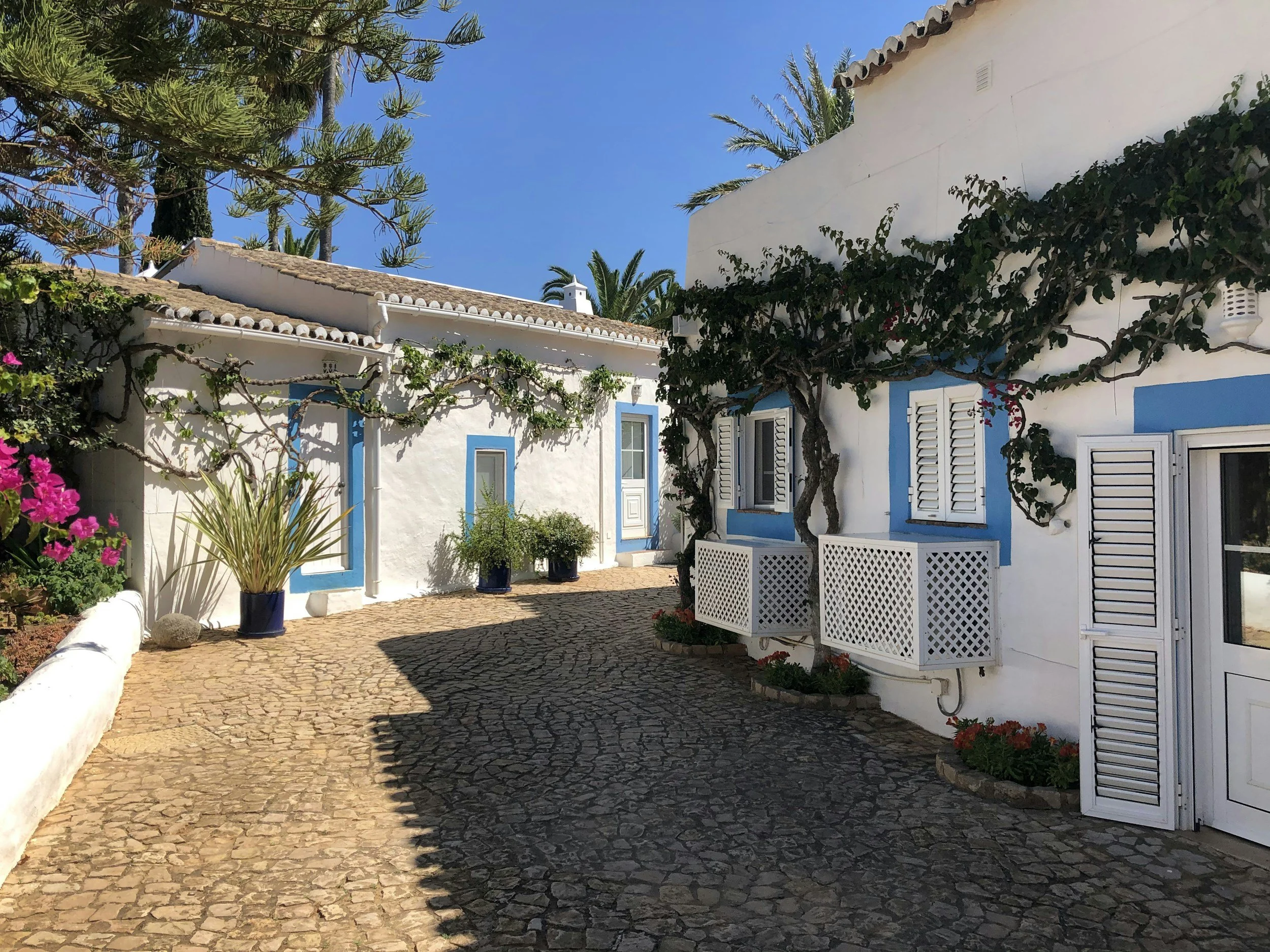
You're not restricted to a single office, and it's worth knowing what's actually down here rather than assuming everything happens in Lisbon.
There are three AIMA locations across the Algarve. Faro is inside the Loja do Cidadão at the Mercado Municipal, Largo Dr. Francisco Sá Carneiro, first floor. Portimão is at Quinta do Morais, Lote 11, Fração A. Albufeira is at Quinta da Bela Vista, Bloco A10, Loja D.
Opening hours differ between them and have changed more than once, so check the official AIMA offices page before travelling. Don't drive to Portimão on the strength of a forum post from last year.
One tip we'd pass on: if you're offered a slot at an office that's inconvenient but soon, think hard before turning it down. An hour in the car usually beats another two months of waiting.
What we'd actually do
Start earlier than feels necessary. Four to six months ahead of any expiry, every time.
Check the Renewals Portal first. If it covers your case, it's far and away the least painful route.
Treat the document list as the real work. Get translations done early and watch the validity dates on anything that expires.
Keep everything. Every reference number, every confirmation email, every screenshot. If you ever need to escalate, that paper trail is your case.
Don't panic at an expired card, but don't ignore one either. Six months of continued residence rights is a cushion, not a solution, and it assumes you've started your renewal.
And check the official sources rather than the Facebook groups. The rules here have changed repeatedly, and a confident answer from 2023 can be completely wrong today. That's not a dig at the groups. It's just that this is a genuinely fast-moving area and out-of-date advice spreads faster than corrections.
Frequently asked questions
How do I book an AIMA appointment?
If you arrived on a residence visa, check your visa paperwork first, as many come with an appointment already scheduled. If you're renewing, use the AIMA Renewals Portal at portal-renovacoes.aima.gov.pt. Otherwise, request one through the AIMA contact form at contactenos.aima.gov.pt, by calling 217 115 000 on weekdays between 8am and 8pm, or by emailing geral@aima.gov.pt.
How long does an AIMA appointment take to come through?
In 2026, most people wait around two to four months from request to appointment. That's a significant improvement on 2024, when six months or more was common. Complex cases and family reunification can still take considerably longer.
Can I choose my own AIMA appointment slot?
Not for most first-time applications. There's no public self-service calendar. You submit a request and AIMA assigns you a date. Renewals through the Renewals Portal are the main exception and move much faster.
What happens if my residence card expires before my appointment?
Your right of residence continues for six months after the expiry date under Article 63(14) of Decreto Regulamentar 84/2007, provided you have started your renewal. The automatic extensions that ran from 2020 ended on 15 October 2025, so an expired card with no renewal underway no longer keeps you covered. Always carry proof that you've applied.
Are expired Portuguese residence cards still automatically valid?
No. That system ended on 15 October 2025. What remains is the narrower six-month window after expiry, and it assumes a renewal is in progress.
What happens if I'm missing a document at my appointment?
Since 28 April 2025, AIMA applies a complete application rule. Arriving without a required document can mean your application is refused at the appointment rather than held open, and you can lose the slot itself. The previous ten-day window to correct a deficient file no longer applies. Check the checklist for your specific permit type carefully beforehand.
Can I take legal action if AIMA won't give me an appointment?
Yes, through an action for the protection of rights, freedoms and guarantees in the administrative courts. However, Article 87-B has narrowed when this urgent route is available, and you now need to show the delay is genuinely damaging your fundamental rights. It requires a lawyer, so take specific legal advice before going down this path.
Where are the AIMA offices in the Algarve?
There are three: Faro, inside the Loja do Cidadão at the Mercado Municipal; Portimão, at Quinta do Morais; and Albufeira, at Quinta da Bela Vista. Opening hours vary and change, so check the official AIMA site before travelling.
The bottom line
AIMA in 2026 is meaningfully better than AIMA in 2024. The task force cleared an enormous amount, the Renewals Portal genuinely works, and waits have come down.
But it still rewards the organised and punishes the last-minute. Start early, get your documents right, use the portal if you can, and keep a record of everything.
And if you're in the middle of it right now, feeling like your file has vanished into a void, you're not alone and it isn't a reflection on you. Nearly everyone who's moved here has a version of this story.
If you're planning a move to the Algarve and want to talk through what the process actually looks like, drop us a message. We've walked a lot of people through this and we're happy to share what we know.
Official sources
Last updated: 20 July 2026. This article is general information, not legal advice. AIMA procedures, opening hours and deadlines change often. Check the official sources above and take Portuguese legal advice on your own situation before acting.
