
Living in Vila do Bispo: The Honest Guide to the Algarve's Wild West
Vila do Bispo is different. You feel it before you even arrive. The landscape changes. The wind picks up. The tourists thin out. And by the time you're walking the streets of this small town at the southwestern tip of Portugal, you realise you've left the Algarve you know behind.
This isn't a beach resort. There are no English breakfasts, no golf courses, no gated communities. What there is, instead, is a town where nearly half the population is international, where the Via Algarviana and the Rota Vicentina hiking trails intersect, and where the concept of "the end of the world" isn't a metaphor. For centuries, Sagres and Vila do Bispo genuinely were considered the end of the known world.
We visited Vila do Bispo as part of our Algarve Unlocked series. Here's what we found.
📺 This article is a companion piece to our Algarve Unlocked video on Vila do Bispo. Watch the full episode for the walking tour, the interview with Portuguese teacher Sílvia, lunch at Restaurant Ashba, and the museum visit.
Where Exactly Is Vila do Bispo?
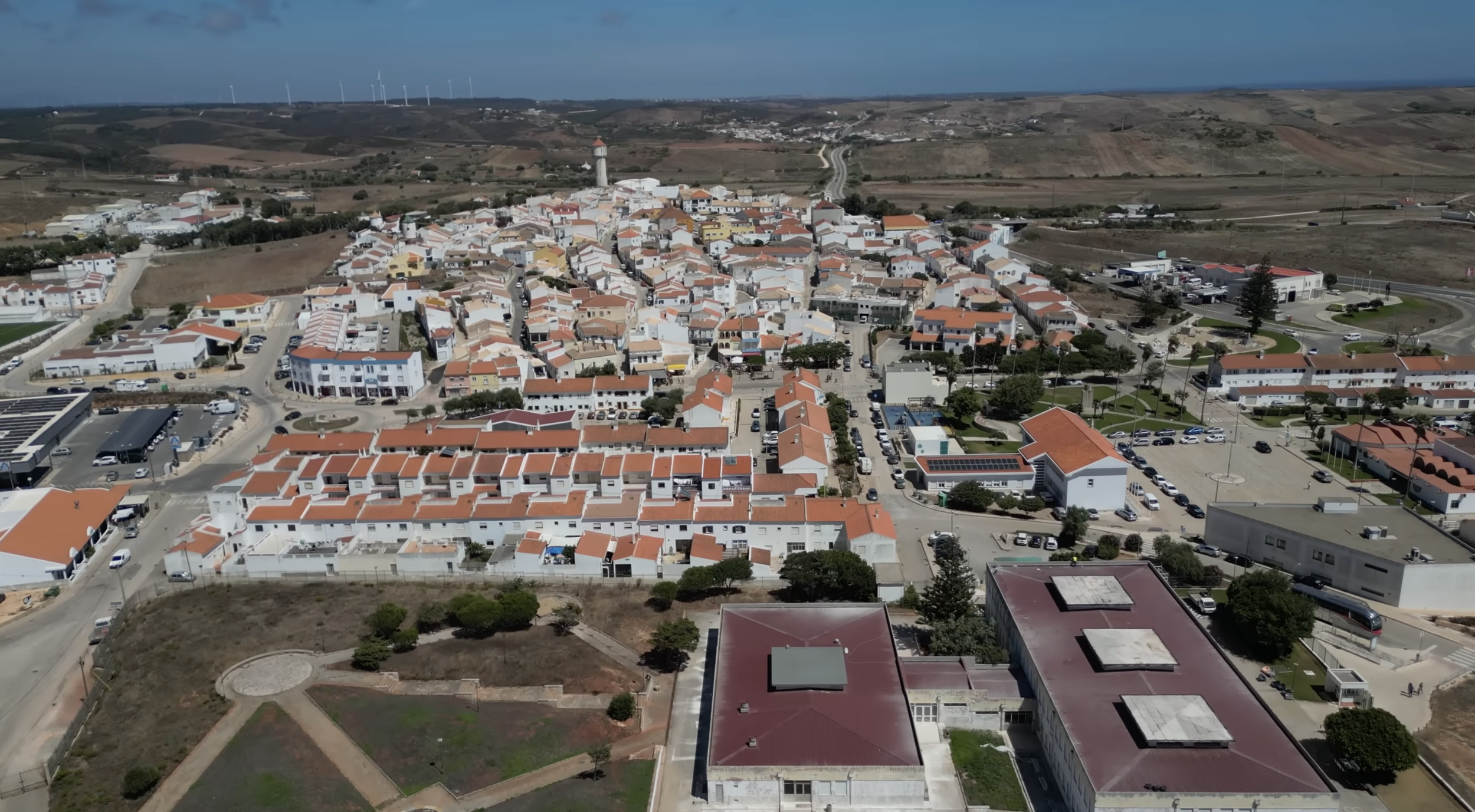
Vila do Bispo is the capital of the municipality of the same name, which covers 179 square kilometres in the extreme southwest corner of the Algarve and has a total population of around 5,700. The town itself has just under 800 residents.
The municipality is divided into four civil parishes: Barão de São Miguel, Budens, Sagres, and Vila do Bispo e Raposeira (the last two merged in 2013). It includes the towns of Sagres, Salema, Budens, and Burgau, among others.
This is the only municipality in Portugal with both a southern and a western coastline, separated by Cabo de São Vicente (Cape St. Vincent). To the south you get sheltered coves and calmer water. To the west you get raw Atlantic surf, high cliffs, and wind.
Getting here takes about 1 hour 20 minutes from Faro airport by car. The EN125 terminates here, and the A22 motorway ends at Lagos, from where it's another 27 kilometres. Public transport effectively ends at Lagos for both train and most bus services. You need a car.
Why Is Vila do Bispo So International?
One of the most striking things about Vila do Bispo is the demographic: approximately 44% of the municipality's population are foreign-born. That's an extraordinary figure for a rural Portuguese town. You'll hear German, Dutch, English, French, and other languages alongside Portuguese in the cafes and on the streets.
Vila do Bispo has always been a crossroads of cultures. The municipality has the most important concentration of menhirs in the entire Algarve, with around 300 megalithic monuments scattered across the landscape, dating back roughly 5,000 years. The area has evidence of human presence going back at least 34,000 years, to the Palaeolithic shelter at Vale Boi.
After the Neolithic settlers came the Phoenicians, Romans, Moors, Suevi, and Visigoths. The Romans traded along this coast, and archaeological sites in the area (including the Roman port and garum production centre at Boca do Rio) attest to centuries of maritime activity. The Moors built farming systems before the Christian reconquest in the 13th century established the medieval Aldeia do Bispo.
Today, the mix continues. As Nick observed, people who choose to live here tend to do so deliberately. It's not a place you end up by accident. The wildness, the remoteness, the wind, the slow pace, these attract a certain kind of person, and they always have.
A Brief History
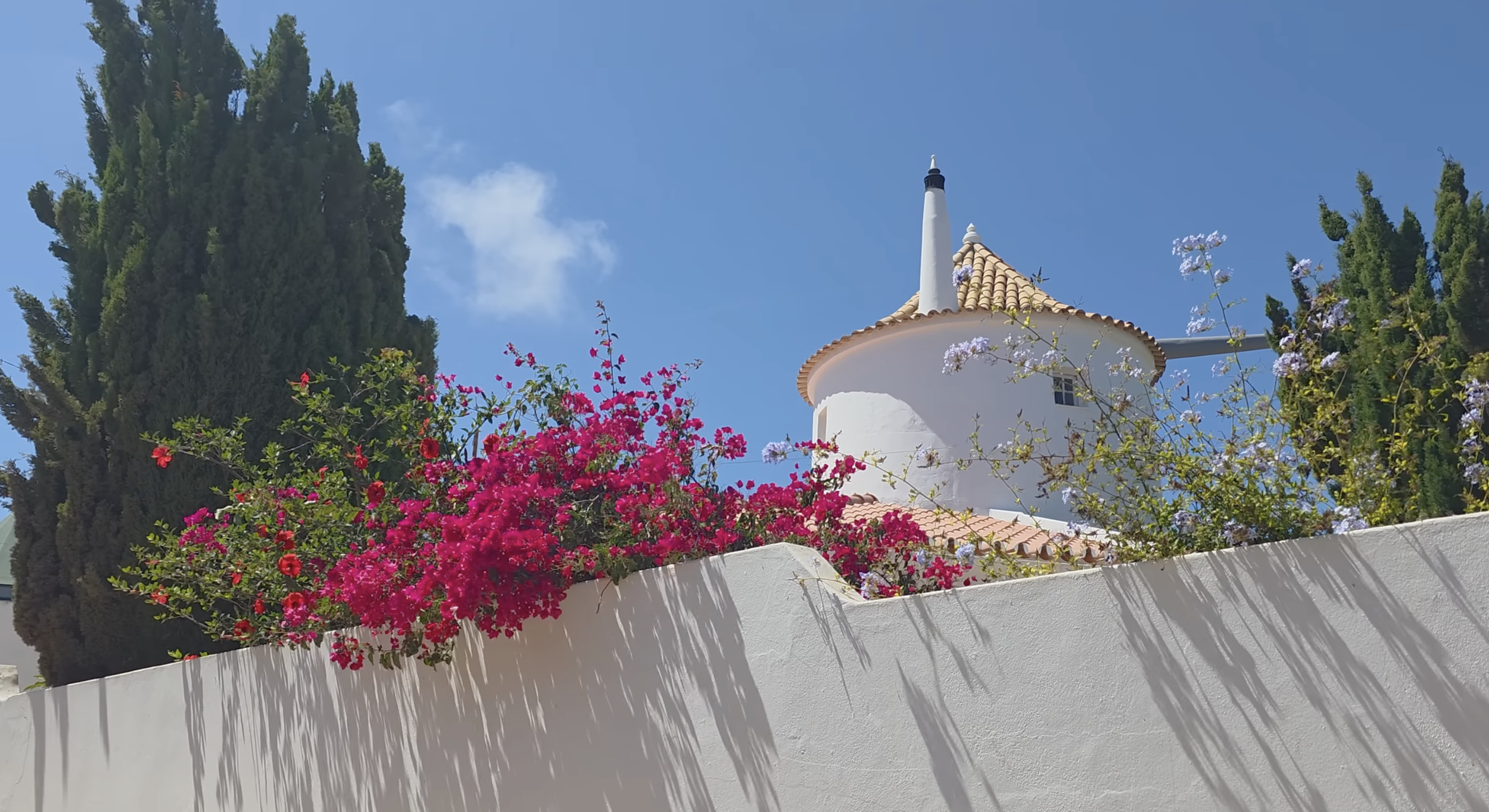
The first historical references to the area date from the 14th century. A charter from 27 March 1329 mentions the "Aldeia do Bispo," and a royal charter of 1353 refers to a "locality that is called Bispo, which is in the Cape of Saint Vincent." One theory is that the name came from King Manuel I donating the village of Santa Maria do Cabo to the Bishop of Silves, Dom Fernando Coutinho, in 1515, but earlier documents suggest the "Aldeia do Bispo" already existed in the 14th century.
The village was elevated to town status in 1662, becoming Vila do Bispo. According to historians, the settlement of Santa Maria do Cabo was razed by the army of Sir Francis Drake. The municipality has had a turbulent administrative history, being separated from Lagos around 1640, abolished in 1855, reincorporated in 1861, abolished again in 1895, and reincorporated in 1898.
The Museum
Inside the Museu de Vila do Bispo, the past comes to life. The collection includes ancient tools, maritime relics, and local archaeological finds spanning thousands of years.
One of the more moving exhibits tells the story of a group of RAF aviators whose Catalina seaplane crashed off this coast during the Second World War. According to the British Historical Society of Portugal, on 22 March 1943, a PBY-5 Catalina belonging to 210 Squadron RAF, based at Gibraltar, crashed at Praia do Tonel in Sagres. Ten crew members (nine British and one Australian) were killed. Two of them, Sergeants Gilbert Orton and George Gibson, are buried in Vila do Bispo. A memorial was unveiled in Vila do Bispo's Jardim da Fonte honouring both the RAF crew and Portuguese military who died in various conflicts.
There's also an interpretation centre in town that reinforces what the museum makes clear: Vila do Bispo has always been at the crossroads of cultures.
What Does the Town Feel Like?
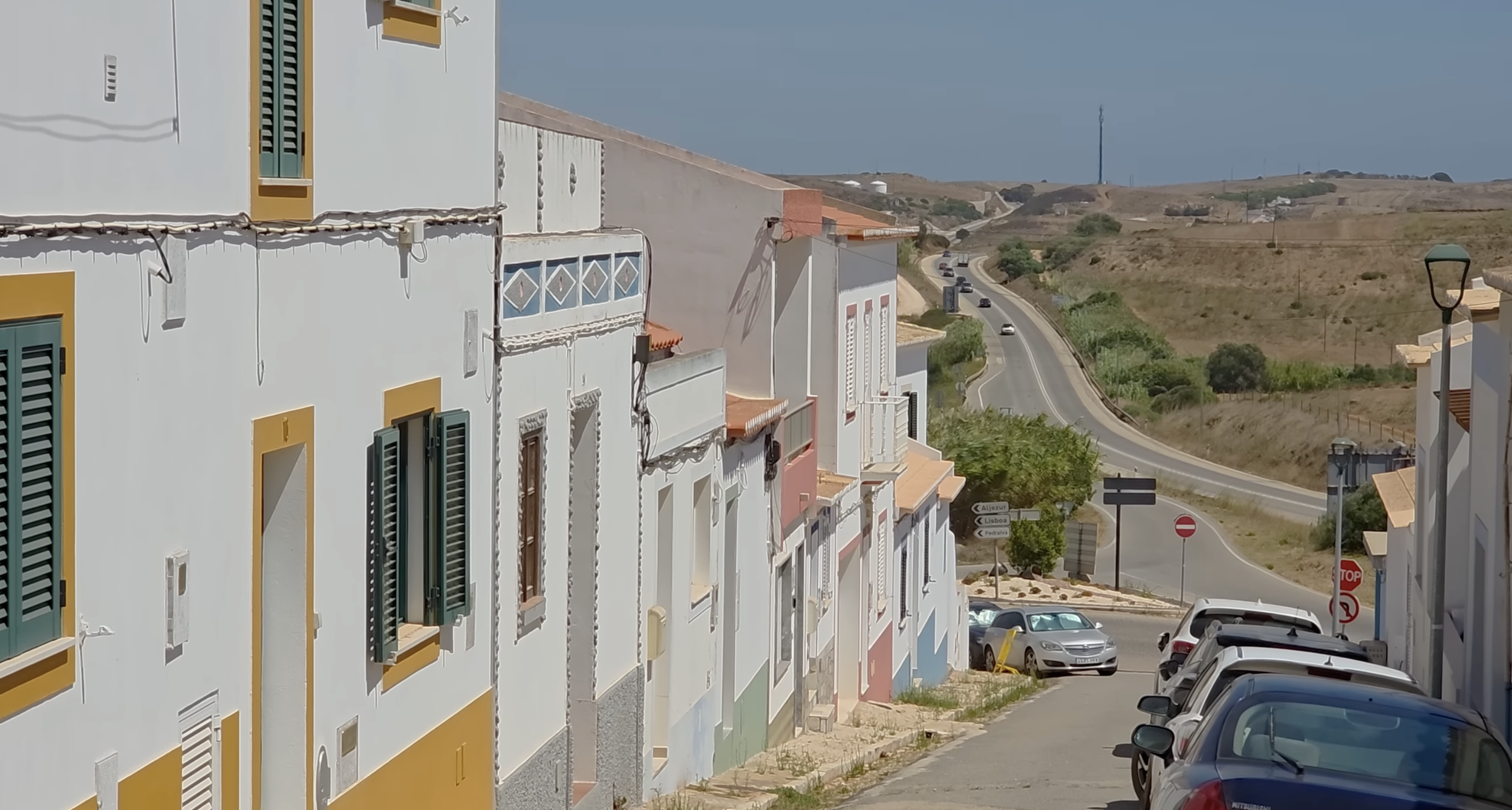
Wild. That's the first word that comes to mind. Nick filmed on a day that was around 20°C and still t-shirt weather, but the wind was fierce. This is not a calm paradise. It's exposed, dramatic, and unapologetically Atlantic.
The town itself is small enough to walk in an hour. The Praça da República has a garden and a couple of restaurants. Heading south past the main church (Igreja Matriz de Vila do Bispo, which has painted azulejo tiles and gilded woodwork), you find a cluster of hotels and guesthouses that serve the hiking community well.
The main street houses the Câmara Municipal (town hall), a cultural centre with a 150-seat auditorium, the local Finanças office, the school, and a Lidl grocery store. An Aldi is nearby. There's a municipal market, a medical centre with an attached private clinic, social security offices, and a petrol station.
For a town of under 800 people, the services are comprehensive. As Sílvia, a Portuguese teacher who lives here, told us: you have everything you'd find in a city, from social security to Finanças to the Câmara, without the queues. The big exception she flagged was healthcare. Access to public healthcare is difficult due to a lack of resources: not enough doctors, nurses, or support staff. For anything beyond basics, you'll likely need to go to Lagos.
The public school also faces resource challenges, but Sílvia made an important point: for families moving here, putting children in the local public school is where the integration actually happens. It's where foreign and Portuguese children grow up together, and it's where the future of this community is being shaped.
The Hiking Connection
Vila do Bispo sits at the intersection of two major long-distance trails. The Via Algarviana (shown as a yellow line on Nick's map) is the longest hiking route in the southern Algarve, running approximately 300 kilometres from Alcoutim to Cabo de São Vicente. The Rota Vicentina (shown in red) heads north along the coast, including the famous Fisherman's Trail. Both pass through or near Vila do Bispo, making it a natural stopping point for hikers and a reason many of the local hotels and guesthouses stay busy.
Could You Actually Live Here?
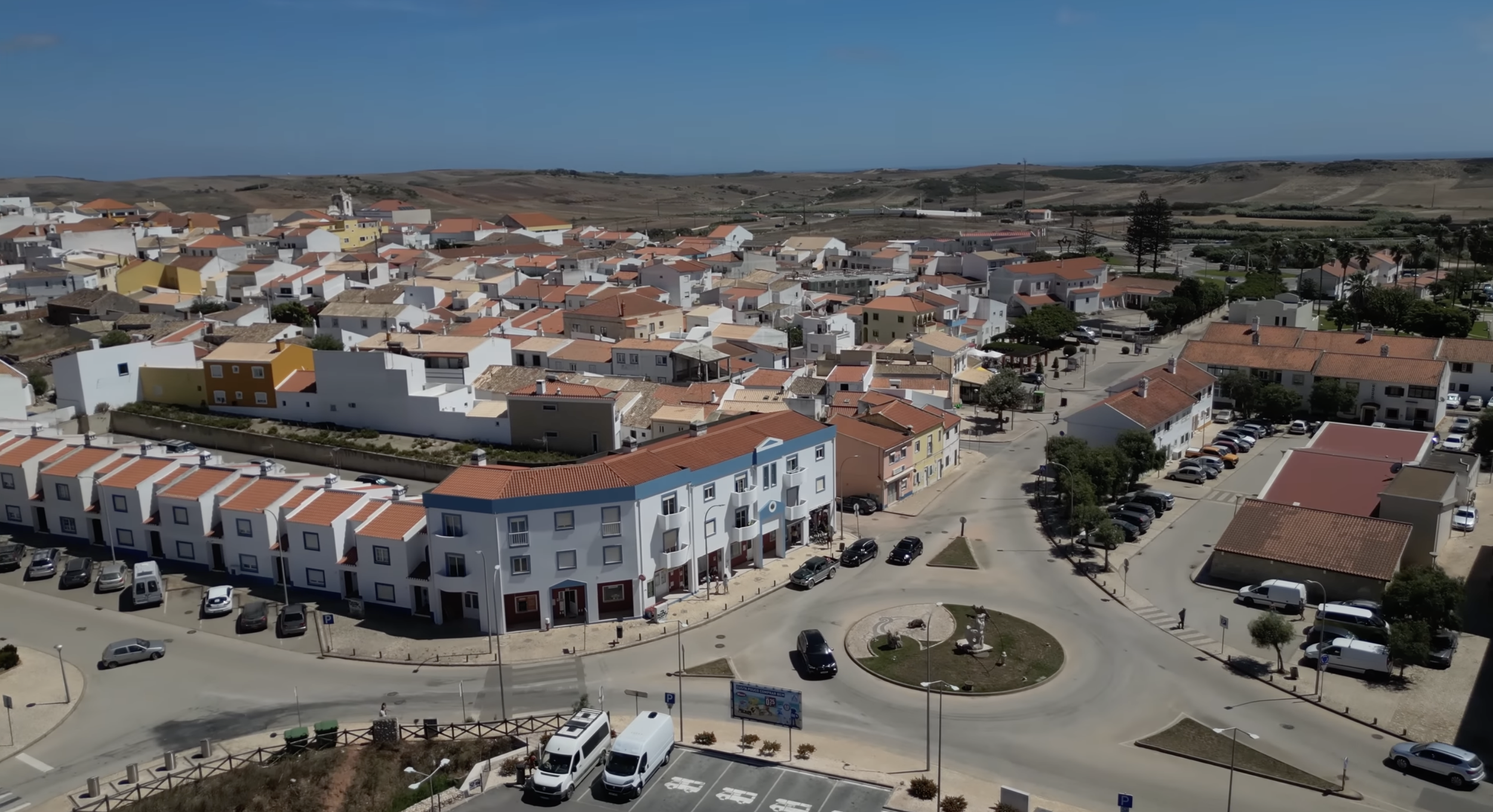
Vila do Bispo suits a very specific kind of person. You need to be comfortable with wind, with remoteness, with limited healthcare access, and with a community that's still working out how its Portuguese and international populations coexist.
The 44% foreign population figure is both a strength and a tension. As Sílvia described it, the two communities (Portuguese and foreign) don't always merge easily. Adults find it harder than children. The public school is where real integration is happening, but it requires foreign parents to commit to their children learning Portuguese and participating in local life rather than defaulting to separate international bubbles.
The practical trade-offs are clear: Lagos is the nearest town with full services, and you'll be driving there for specialist healthcare and major shopping. The coast is spectacular but wild. Winter weather is mild but windy. Summer brings hikers and surfers but nothing like the tourist crush of the central Algarve.
What Vila do Bispo offers in return is something rare: a genuine community at the edge of things, where people live with purpose and at a pace they've chosen. The multicultural mix is real, the landscape is extraordinary, and the sense of being somewhere that history has swept through again and again, leaving each wave of arrivals to add their own layer, is palpable.
As Nick put it: this has always been the end of the world, and it still feels a little bit like that. That's either exactly what you want or exactly what you don't.
Vila do Bispo at a Glance
Municipality: Vila do Bispo
Town population: approximately 800
Municipality population: approximately 5,700
Municipality area: 179 km²
Location: Extreme southwest Algarve, only Portuguese municipality with both southern and western coastline
Faro airport: approximately 1 hour 20 minutes by car
Lagos: approximately 27 km
Public transport: Buses; train and most services terminate at Lagos
Schools: Local public school
Health facilities: Medical centre with private clinic attached; limited public healthcare resources; Lagos for specialist care
Shopping: Lidl, Aldi, municipal market, mini markets
Key features: Via Algarviana and Rota Vicentina trail intersection, Museu de Vila do Bispo, ~300 megalithic menhirs in municipality, Cabo de São Vicente nearby, Parque Natural do Sudoeste Alentejano e Costa Vicentina
International population: approximately 44% of municipality
Frequently Asked Questions
How far is Vila do Bispo from Sagres? About 10 minutes by car. Sagres is one of the parishes within the Vila do Bispo municipality.
Is it very windy? Yes. The western and southern coastlines are exposed to the Atlantic, and the area is notably windier than the central or eastern Algarve. Even on warm days, the wind can be strong. This is a feature, not a bug, for the people who choose to live here.
Is there a significant expat community? Yes, approximately 44% of the municipality's population are foreign-born, a remarkably high figure. The community includes German, Dutch, British, French, American, and other nationalities. Integration with the Portuguese community is an ongoing and sometimes challenging process.
What about healthcare? This is the main weakness flagged by both Nick and local residents. There's a medical centre in town with a private clinic attached, but public healthcare access is limited due to a shortage of doctors and staff. For anything beyond basics, Lagos is the nearest option.
Can I get by without a car? Not realistically. Public transport is limited, and Lagos (the nearest town with full services, train station, and bus connections) is 27 kilometres away. A car is essential for daily life here.
Thinking about relocating to the Algarve? We've been helping people make the move since our earliest days as a YouTube channel, and today we're a fully licensed real estate agency and certified tour operator. Whether you need help finding a home, understanding the visa process, or just want someone to show you around, get in touch through our website and let's chat about making the Algarve work for you. You can also explore our full range of relocation services here.
