
Querença and Ombria: When an 800-Year-Old Village Meets a Five-Star Resort
This video was different from the others in our Algarve Unlocked series because it isn't about one place. It's about two, sitting practically on top of each other and representing completely different visions of what the Algarve can be.
Querença is a hilltop village in the Barrocal hills north of Loulé. It's been continuously settled for at least 700 to 800 years, with deeper roots stretching back over 2,500 years when you include Moorish, Roman, and prehistoric presence. It's centred around a 16th century church, has a population of around 760 people, and feels largely unchanged by time.
Ombria Resort is a brand-new five-star luxury development right next door. It spans 153 hectares, has 141 suites and residences managed by the Viceroy hotel group, an 18-hole golf course, six restaurants and bars, a spa, and a projected total investment of around €260 million by the time the full project is completed.
The question Nick asked in the video is the right one: what happens when these two worlds collide?
📺 This article is a companion piece to our Algarve Unlocked video on Querença and Ombria. Watch the full episode for the walking tours, the interview with longtime resident Ralph, and lunch at Restaurant de Querença.
Where Are They?
Both sit in the municipality of Loulé, about 30 minutes from Faro airport and the same distance to Falésia beach on the coast. Querença is a parish (freguesia) within Loulé, covering about 37 square kilometres. Just north of Loulé, heading toward Salir, you'll find the turnoff to Ombria, with Querença a little further along.
Bus 27 leaves Loulé twice daily for Querença and takes about 25-30 minutes. But as with most inland Algarve, a car is the realistic option.
The two are close enough to see from each other, and that proximity is what makes this comparison so striking.
Querença: The Village
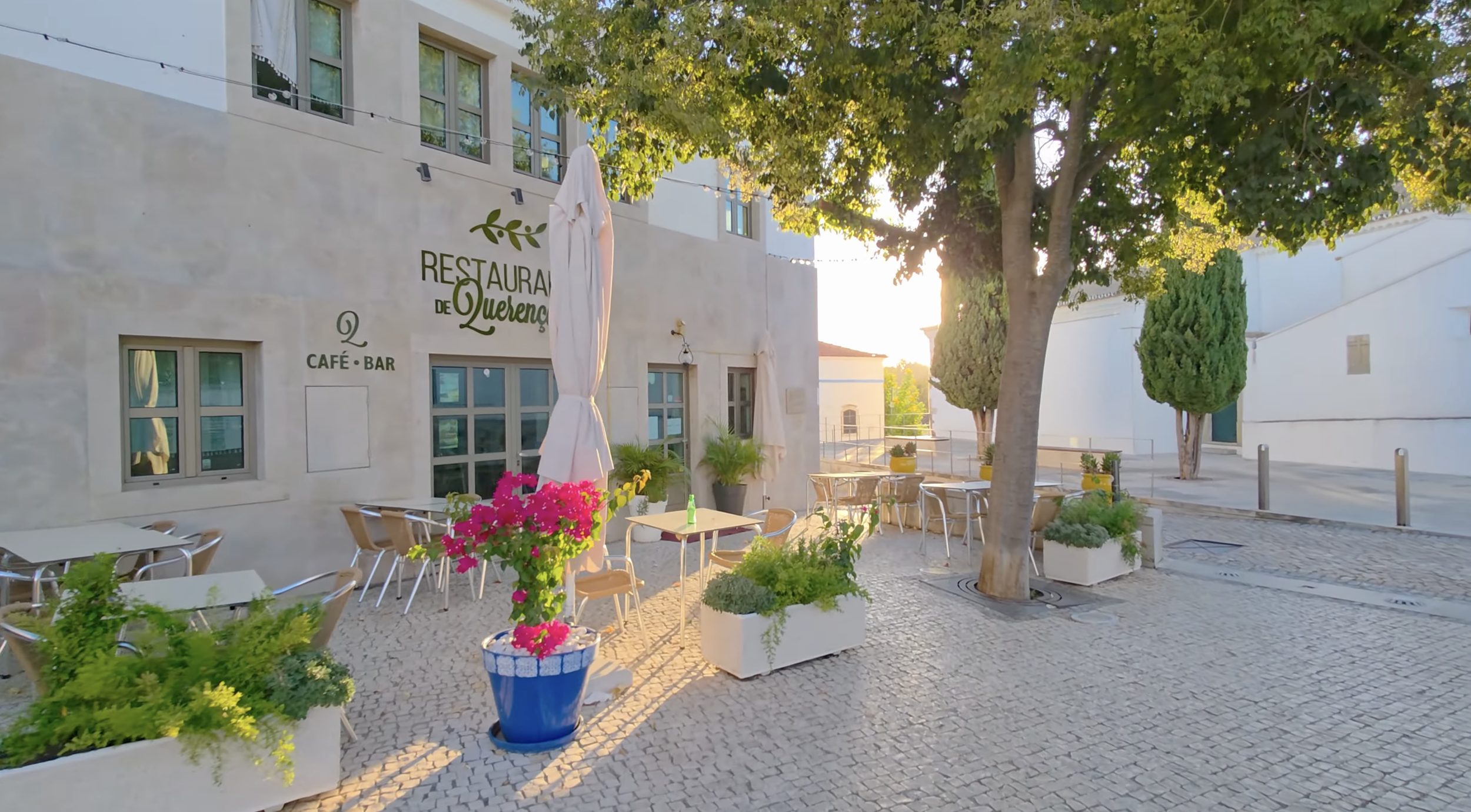
Querença sits on a hilltop in the Barrocal, the fertile limestone landscape between the Algarve coast and the Serra do Caldeirão mountains. According to Wikipedia, the parish had 759 inhabitants in the 2011 census. The village is part of the Algarvensis Geopark and falls within the Natura 2000 network.
The settlement has deep roots. Recent research has uncovered Roman road markers in the area that establish ancient routes running up to Alcasal, confirming that Querença was part of the Roman road system. Nick noted that it's safe to say the area has been continuously settled for at least 700-800 years, with roots going back well over 2,500 years when including Moorish, Roman, and prehistoric presence.
The village is centred around the Igreja de Nossa Senhora da Assunção, a 16th century church. Visit Portugal describes Querença as a "typical Algarve village featuring traditional architecture, whitewashed houses, and traditional chimneys." On the same square as the church you'll find a wooden cross, a small museum dedicated to the history of water use in the parish, and a handful of cafes and restaurants.
The parish is known for its arbutus (medronho berry) production and its chorizo sausage. The annual Festa das Chouriças (Sausage Festival) is held every third Sunday in January, filling the town square with red wine, chouriço, piping hot oven-baked bread, and hundreds of people. There's also an Easter festival featuring folar (traditional Easter cake), and a summer festival with music, dancing, and food. These community events are a genuine part of local life, not tourist productions.
The surrounding area includes the Fonte Benémola, a Local Protected Area covering 392 hectares where the Ribeira de Menalva flows year-round (unusual in the Algarve, where many streams dry up in summer). It's an excellent spot for hiking and birdwatching, with ash, willow, and tamarisk along the banks. The nearby Ribeira de Mercês has an old irrigation system of levadas and water mills dating back to the Moorish occupation.
Eating in Querença
Nick has been visiting Querença for about 20 years. He remembers eating at what is now Restaurant de Querença two decades ago, when the prato do dia cost €6 and came with couvert, a main course, dessert, a drink, and coffee. That same kind of meal now runs around €12-15, which is still excellent value.
During filming, he had lunch there with his friend Ralph (a four-and-a-half-year resident of the area). They shared couvert, a plate of javali (wild boar), a veal kebab with salad, pork with mushroom and cream sauce, two glasses of red wine, a bottle of water, and two desserts including what Nick described as "one of the best chocolate cakes in the world."
There's also Café Dona Rosa on the square, and a snack bar down the hill that Ralph identified as where the real locals eat.
Ombria Resort: The Newcomer
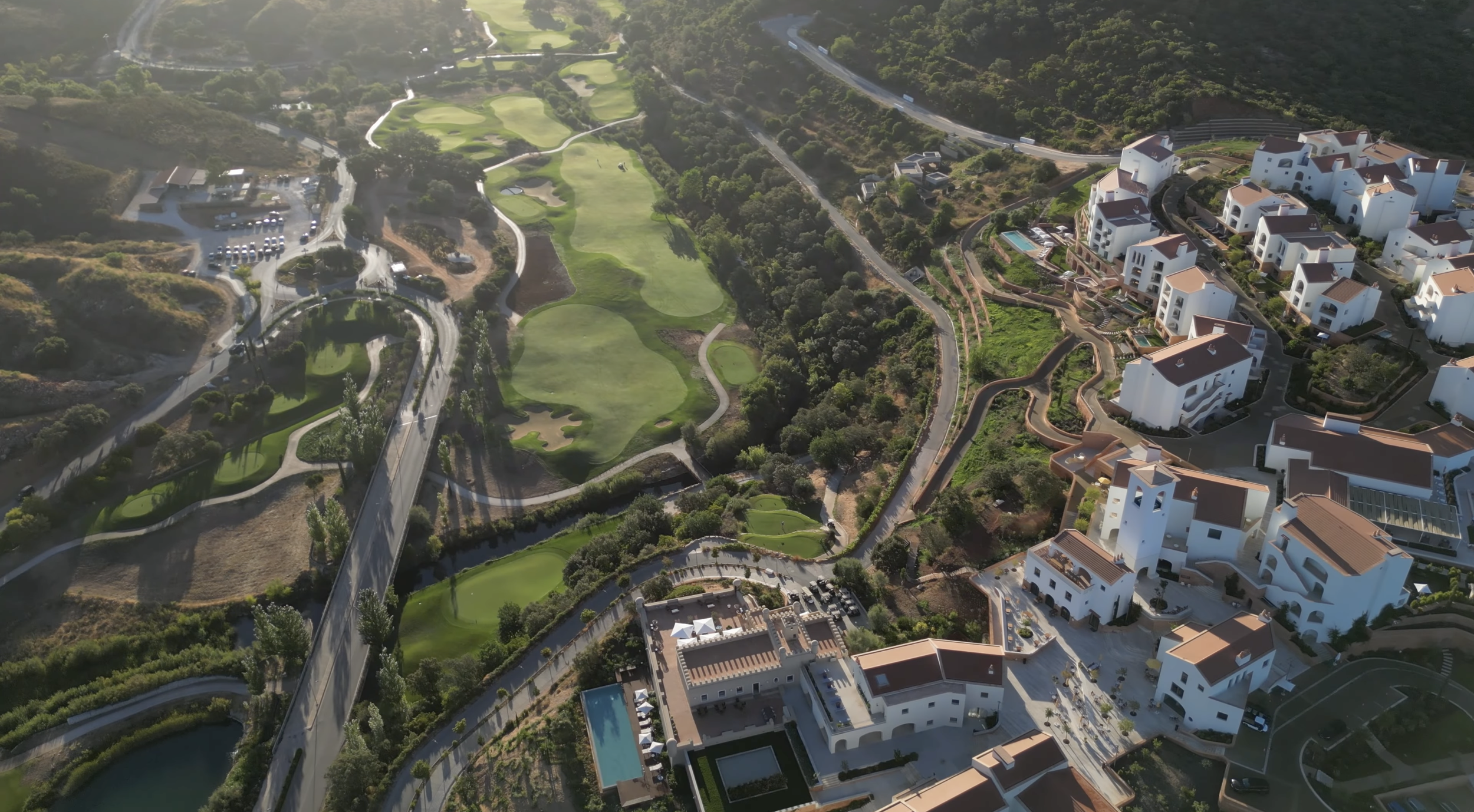
Ombria Resort (now operating under the Viceroy hotel brand as "Viceroy at Ombria Algarve") is a five-star luxury development spanning approximately 153 hectares of Algarve hills. It was developed by Finnish company Pontos Group and is managed by Viceroy Hotels & Resorts.
The resort features 141 luxury guestrooms, suites, and residences (Nick said "141 five-star suites and residences" in the video; the Viceroy website confirms this number). It has an 18-hole par-71 golf course designed by Jorge Santana da Silva, which won the Best New Golf Course award at the World Golf Awards. More than 700 oak trees were planted and rivers were restored as part of the development. The resort has been GEO Foundation certified for its environmental approach.
There are six restaurants and bars on site: Ombria Kitchen (an all-day restaurant), Casa Eufória (a sports bar-styled venue), Solua (a sunset bar and restaurant with cocktails and Portuguese small plates), Café Central (a patisserie with homemade chocolates and pastries — Nick loved the almond pastry), Sal e Pú (a poolside bar), and Belvino (a rooftop wine bar featuring regional wines, cheeses, olive oils, and charcuterie).
The total investment is projected at around €260 million by the time the full project is completed (expected around 2030). Property options within the resort include the Viceroy Residences (branded residences with full hotel management), Oriole Village (apartments, townhouses, and villas), and Alcedo Villas (luxury detached villas with customisable finishes).
Everything at Ombria is open to the public. You can drive in, have a coffee, use the restaurants, and play the golf course. But as Nick noted: bring your wallet, because it's pricey.
Ralph's Perspective: A Resident's View
Ralph has lived in the area for four and a half years. He built his own house near Querença, knows the locals, and has integrated to the point of organising amphitheatre concerts at his property that bring together 100-150 people — a mix of Portuguese locals and international residents.
His view on Ombria was balanced. He acknowledged that the facilities are amazing and the golf course is fantastic (he's played it). But he'd like to see the resort open up more to the local community, perhaps through discounted access, because the prices put it out of reach for most Portuguese residents. As he put it: "Here, what you see is the true Portugal. There, it's an enclave. A world on its own."
On living in the area more broadly, Ralph was enthusiastic. For shopping, you go to Loulé. There's a Spar in Salir for basics. But the real draw is the nature: hiking, biking, silence, and clean air. He described moments of hearing nothing but bees, wind, and birds. "Those people who love that kind of stuff are absolutely welcome here," he said.
Can They Coexist?
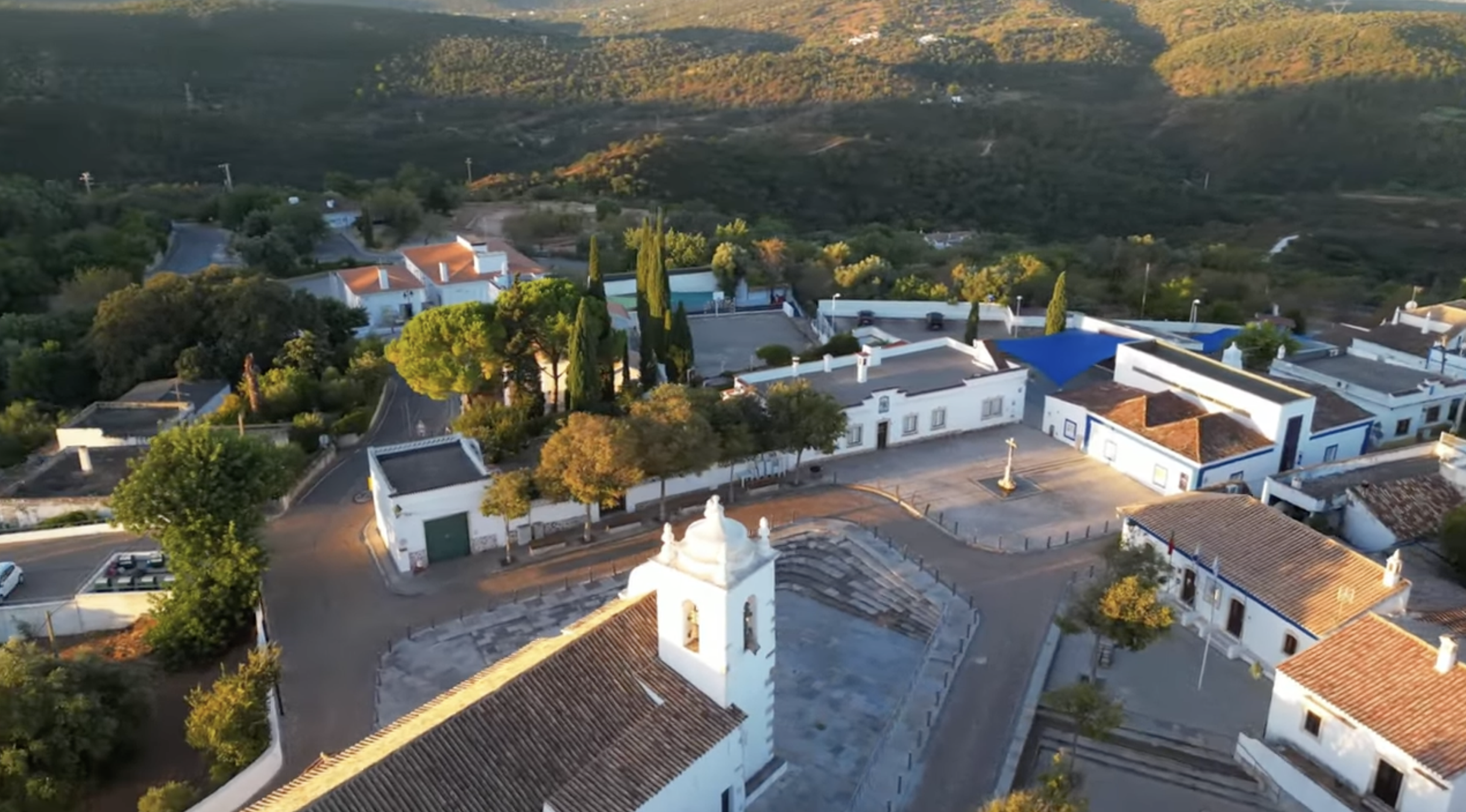
This is the question at the heart of the video, and there's no simple answer.
Querença and Ombria serve completely different people. Querença is for those who want authentic rural Portugal: slow, quiet, community-driven, and affordable. Ombria is for those who want luxury, golf, fine dining, and high-end facilities set in a beautiful natural landscape. The two aren't really competing because they're not offering the same thing.
But the tension is real. A €260 million resort changes the economics of the surrounding area. Property prices shift. Traffic patterns change. The demographic balance between locals and international visitors tilts. Whether Ombria will enrich the surrounding communities through employment and investment, or gradually erode what made them special in the first place, remains to be seen.
As Nick put it: if you're a Querença person, go to Querença. If you're an Ombria person, go to Ombria. Both are fantastic. They're just for completely different people.
At a Glance
Querença
Municipality: Loulé
Parish population: 759 (2011 census)
Parish area: 37.18 km²
Location: Barrocal hills, approximately 10km north of Loulé
Key features: 16th century Igreja de Nossa Senhora da Assunção, Fonte Benémola protected area, Festa das Chouriças (January), Roman road heritage
Restaurants: Restaurante de Querença, Café Dona Rosa, local snack bar
Shopping: Loulé (30 minutes); Spar in Salir
Ombria Resort (Viceroy at Ombria Algarve)
Location: Hills north of Loulé, near Querença and Tôr
Size: approximately 153 hectares
Hotel: 141 guestrooms, suites, and residences (five-star, managed by Viceroy Hotels)
Golf: 18-hole par-71 course (designed by Jorge Santana da Silva; World Golf Awards winner)
Restaurants: 6 (Ombria Kitchen, Casa Eufória, Solua, Café Central, Sal e Pú, Belvino)
Investment: projected €260 million total
Faro airport: approximately 30 minutes by car
Frequently Asked Questions
Can I visit Ombria Resort without staying there? Yes. All restaurants, bars, and facilities are open to the public. You can drive in and have a coffee at Café Central or lunch at Ombria Kitchen. The golf course is also open to non-residents.
Is Querença worth visiting? Absolutely. It's a genuine, unspoiled Algarve village with beautiful surroundings, good food, and the Fonte Benémola nature reserve nearby. The January Sausage Festival is a highlight.
How do the two relate to each other geographically? They're very close — you can see one from the other. Ombria Resort is situated in the hills near the parishes of Querença and Tôr, just a few minutes' drive between them.
Is this area a realistic place to live? For Querença, yes, if you want genuine rural Algarve life. Loulé with its full range of services is about 20-30 minutes away. For Ombria, it's a luxury resort with property for sale, aimed at those who want high-end facilities in a countryside setting. Both require a car.
What's the Fonte Benémola? A 392-hectare Local Protected Area between the parishes of Tôr and Querença, featuring the Ribeira de Menalva, which flows year-round. It's excellent for hiking and birdwatching in a lush, green setting that feels very different from the dry coast.
Thinking about relocating to the Algarve? We've been helping people make the move since our earliest days as a YouTube channel, and today we're a fully licensed real estate agency and certified tour operator. Whether you need help finding a home, understanding the visa process, or just want someone to show you around, get in touch through our website and let's chat about making the Algarve work for you. You can also explore our full range of relocation services here.
